
A morning with one of the last hunter-gatherer communities in East Africa is unforgettable. Here is how to make it a meeting between equals, not a show.
Lake Eyasi lies in a hot, quiet valley below the Ngorongoro highlands. It is home to the Hadzabe, one of the last communities in East Africa who still live largely by hunting and gathering. Their language, Hadzane, uses click sounds found almost nowhere else, and their knowledge of the bush is extraordinary.
Spending a morning with a Hadzabe family is often the moment our guests talk about most. It can also be done badly. Here is how we approach it, and what you can expect.
Why we go at dawn
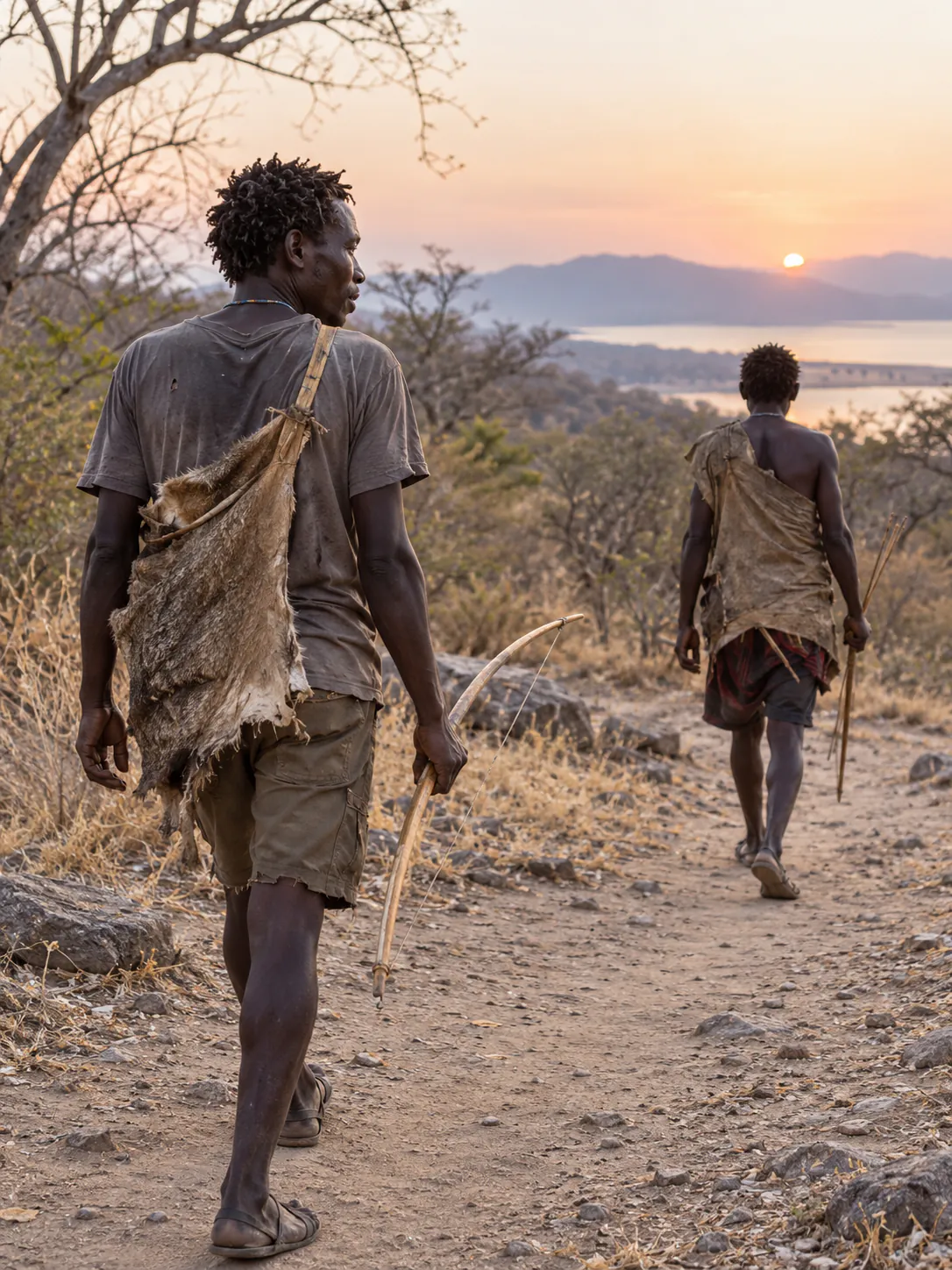
We leave camp in the dark and arrive as the hunters are waking. The morning is cool, the light is soft, and this is when the day’s hunting really happens. You are not watching a demonstration put on for visitors. You are walking along with people going about their morning.
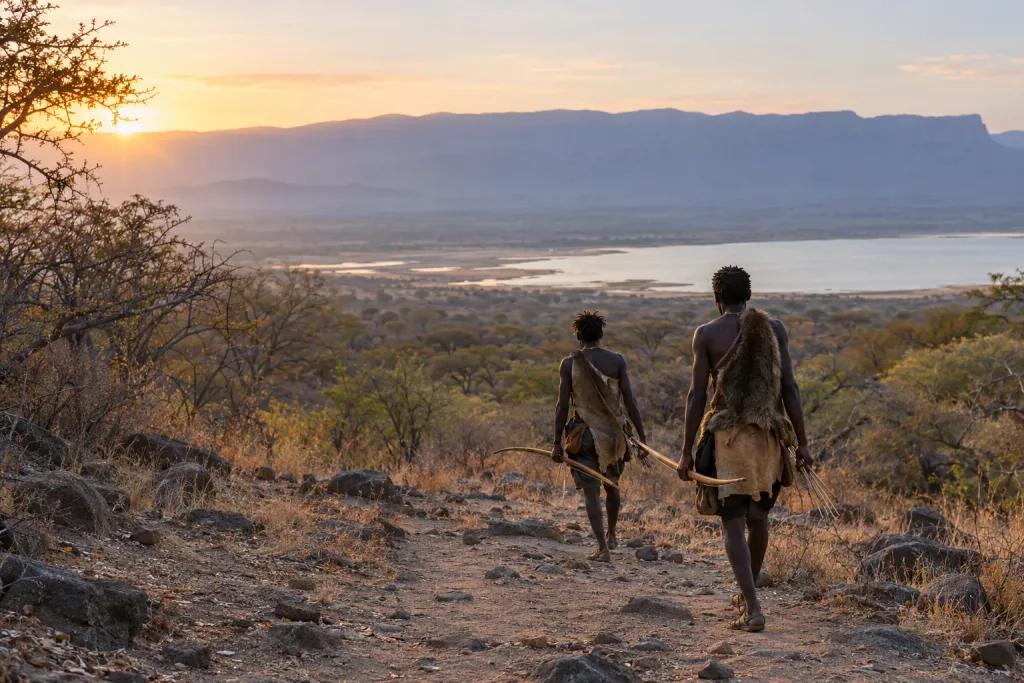
Expect to walk for one to three hours at the hunters’ pace, through thorny bush and over rocky ground. Wear closed shoes and long trousers, carry water, and leave anything bright or noisy in the vehicle.
What happens on the walk
You may see the hunters track a dik-dik, smoke out a bees’ nest for honey, or dig for tubers. Some mornings end with a small bird or a squirrel, some with nothing at all. That is part of the honesty of it. Afterwards there is usually time to sit around the fire, try your hand with a bow, and ask questions through your guide.
The etiquette that matters
- Follow your guide’s lead. They know the families and will tell you when to keep back and when to join in.
- Ask before you photograph. Most people are happy to be photographed, but asking first changes the whole feeling of the visit. Put the camera away for long stretches too.
- Do not hand out sweets, pens or money. It creates dependence and changes how children see visitors. Support goes through the community fee instead.
- Dress simply and modestly. Neutral colours, covered shoulders and nothing that looks like a costume.
- Keep the group small. We never bring large groups, and we never visit more than one family in a morning.
Where your money goes
Visits are arranged with the community, and a fee is paid directly to them for every guest. We also buy honey, arrows and crafts at a fair price when families want to sell them, never haggling hard for a few shillings.
A good visit leaves the family with fair payment and their dignity intact, and leaves you with a little more understanding than you arrived with.
Combine it with the Datoga
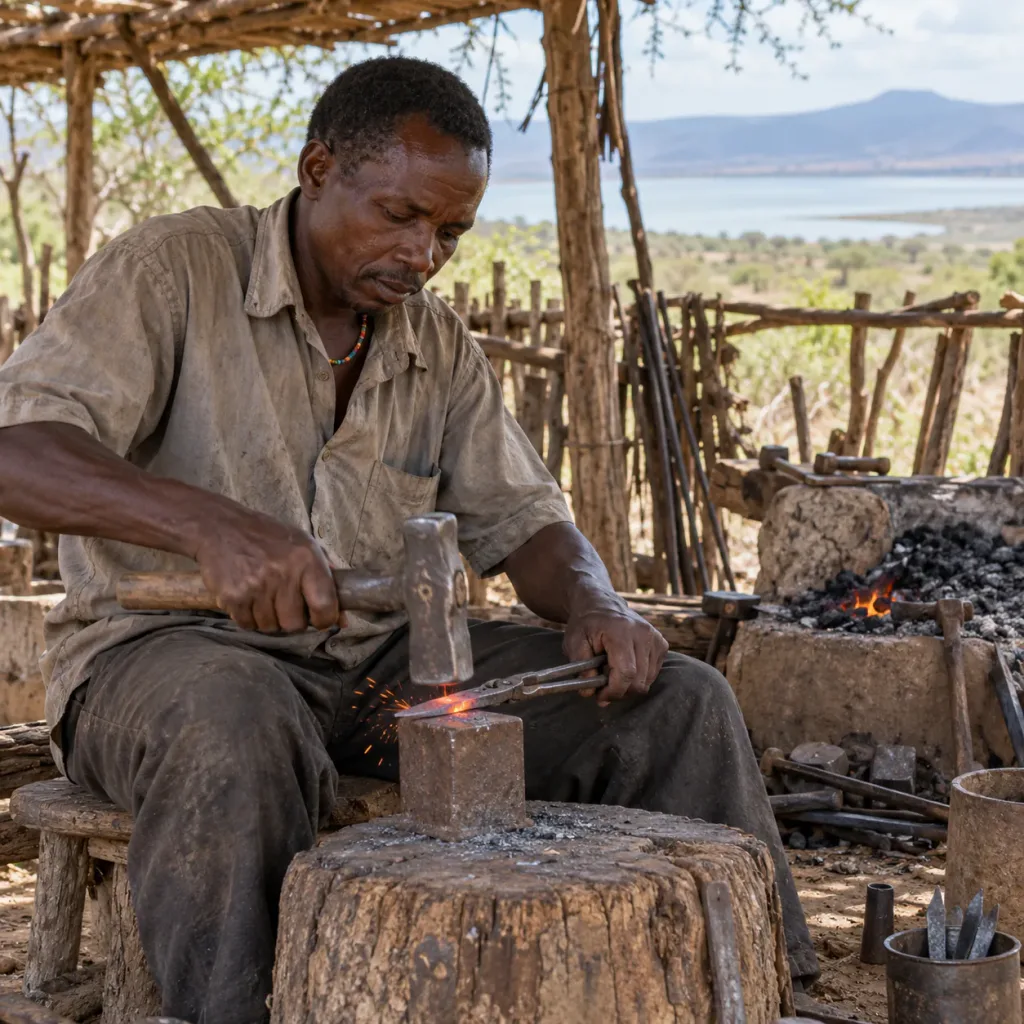
The Datoga, pastoralists and skilled blacksmiths, live nearby. Many guests visit a Datoga forge the same afternoon to watch arrowheads and bracelets being made from scrap metal, often the same arrowheads the Hadzabe use. Seeing the two communities on the same day shows how closely their lives are linked.
Fitting Lake Eyasi into your safari
Lake Eyasi sits between Karatu and the Serengeti, so it fits naturally into a northern circuit. Most guests spend one or two nights at a small camp by the lake before continuing to the Ngorongoro Crater or the Serengeti. It features in our Tribes of the Rift Valley journey, and we can add it to almost any Tanzania itinerary.