
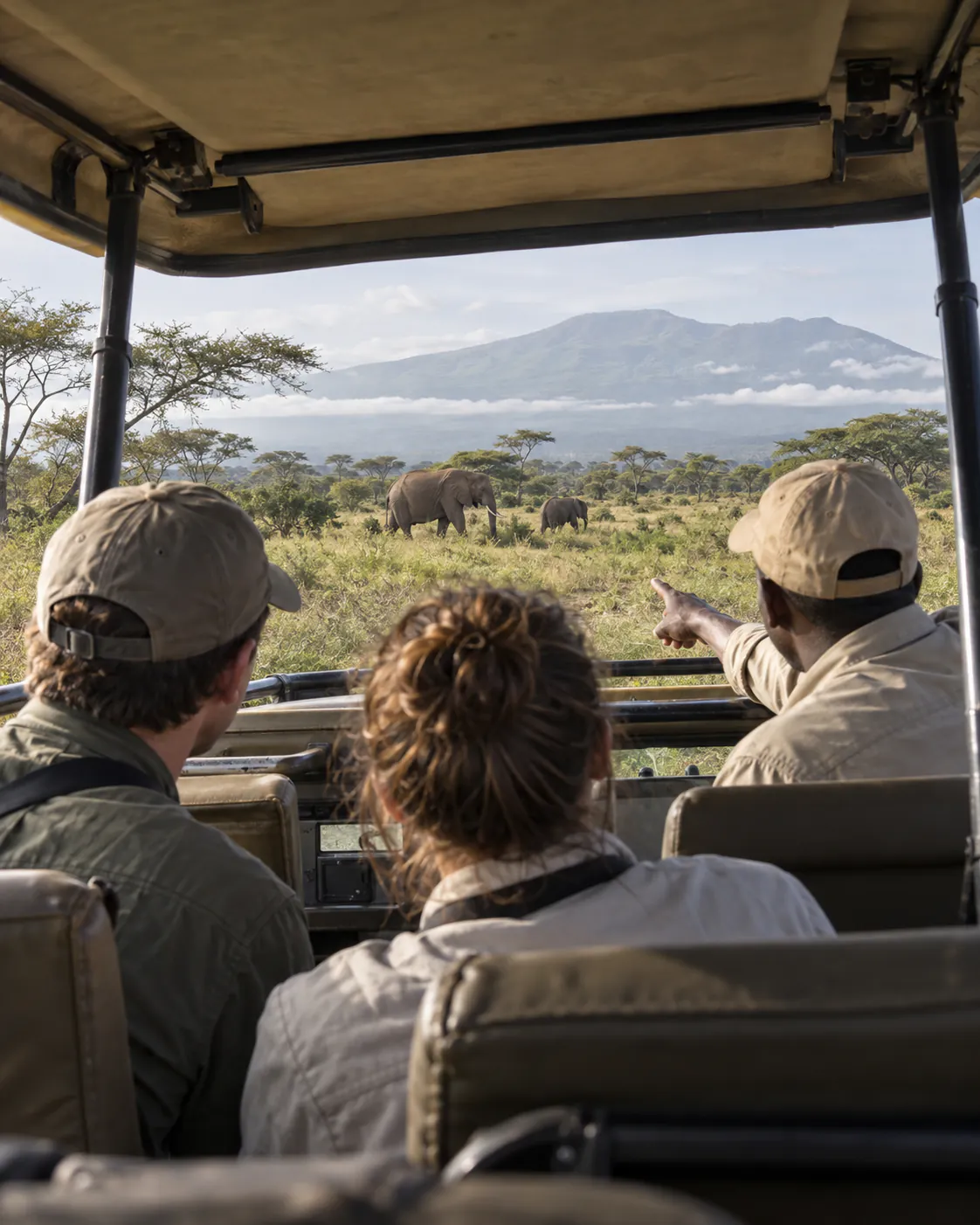
Soft bags, neutral layers and a warm fleece for the crater rim. The packing list our guides give every guest, with the few things that really matter.
Packing for a safari is simpler than most people expect. You will spend your days in a vehicle and your evenings at camp, laundry is often included, and almost nobody dresses up. The trick is to pack light, pack layers and leave a few things at home.
This is the list our guides share with every guest before they travel.
Start with the bag
If your safari includes a light aircraft flight, for example between the Serengeti and Zanzibar, the luggage limit is usually 15 kg per person, in a soft bag with no wheels or frame. Hard suitcases do not fit in the small planes. Even on a driving safari, a soft duffel is easier to load into the vehicle.
Bring a small daypack for the vehicle with your camera, binoculars, sunscreen and a layer.
Clothes: neutral, light and layered
- Neutral colours. Khaki, olive, sand and brown. Avoid dark blue and black, which attract tsetse flies, and bright white, which shows dust instantly.
- No camouflage. Camouflage clothing is reserved for the military in Tanzania and can cause problems at checkpoints.
- Layers. Mornings on game drives are cold, especially on the Ngorongoro Crater rim at around 2,300 metres. Bring a warm fleece or light down jacket, plus a windproof layer.
- Long sleeves and trousers for evenings, when mosquitoes come out.
- Comfortable closed shoes for walking, and sandals for camp.
- A wide-brimmed hat and sunglasses. The equatorial sun is strong even when it feels cool.
- Swimwear if you are ending on the coast or staying at a lodge with a pool.
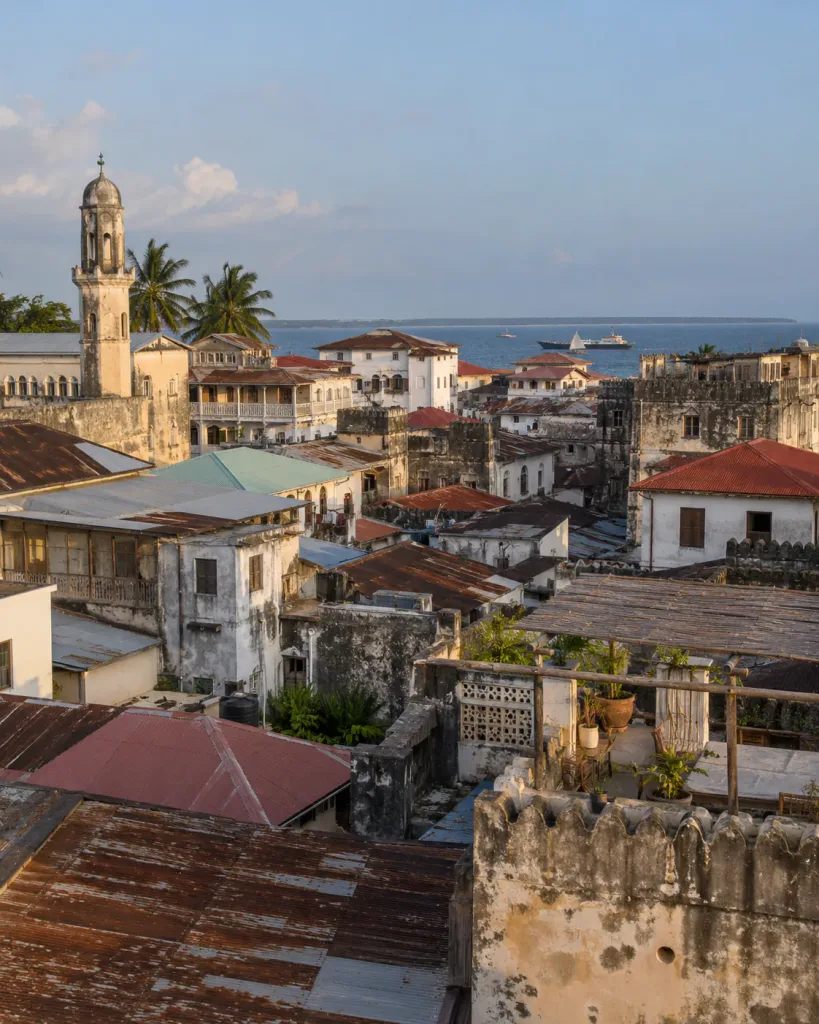
- Something modest for Zanzibar. In Stone Town and the villages, cover shoulders and knees.
Gear that makes a difference
- Binoculars. The single most useful thing you can bring. One pair each is ideal.
- Camera with a zoom lens. A 100 to 400 mm range covers most wildlife. Bring spare batteries and memory cards.
- A power bank and adapter. Tanzania mainly uses the UK-style three-pin plug (type G), with some type D sockets. Many camps charge on solar power, so charging may be limited to certain hours.
- A head torch for walking around camp after dark.
- A reusable water bottle. Most camps refill them with filtered water.
Health and documents
- Passport valid for at least six months, with blank pages.
- Visa: most visitors can apply for an e-visa online before travel. Check the latest rules for your nationality.
- Yellow fever certificate if you are arriving from, or transiting through, a country with yellow fever risk.
- Malaria tablets and any personal medication. Speak to a travel clinic six to eight weeks before you go.
- Insect repellent with DEET or picaridin.
- Travel insurance that includes medical evacuation.
What to leave at home
- Plastic carrier bags. They are banned in Tanzania and may be taken from you at the airport. Use zip-lock bags only for toiletries.
- Drones. They need special permits and are not allowed in national parks without them.
- Too many clothes. Most camps offer laundry, so a few days’ worth is plenty.
Pack for the person you will be on safari: up before dawn, outdoors all day, and happiest in clothes that do not need any thought.
A few small extras our guests love
A lightweight scarf (sun, dust and chilly mornings in one), a field guide or bird book, a notebook for the names of the people you meet, and a few photos of home to share. Those photos start more conversations in a Maasai boma than any gift could.
Once you book, we send a detailed packing list for your exact camps and season, including any luggage limits for your flights.